
Πανηγύρι στο Πυργί
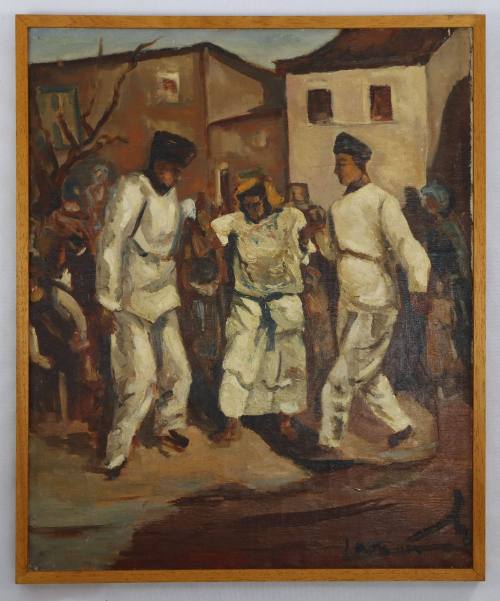
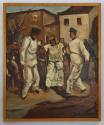
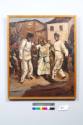
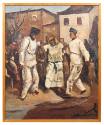
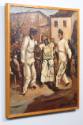
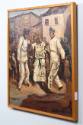
000020 Yannis Mitarakis, Fair in Pyrgi, 1932, oil on canvas, 75.5 × 62.5 cm
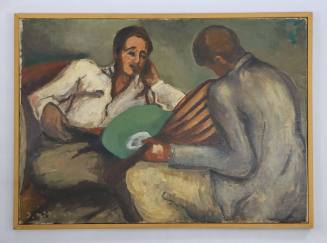
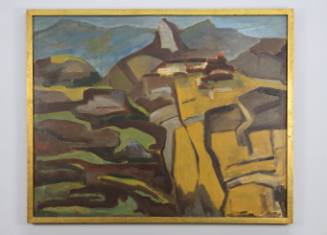
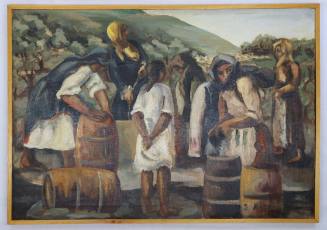
At the beginning of the 1930s, Expressionism still had little impact on the small artistic community of Athens. As a result, Mitarakis’s expressionist conception and depiction of the village festival in Pyrgi for the Feast of the Dormition of the Virgin (15 August), along with his genre compositions from Megara, were not warmly received. Both the public and critics of the time responded with hesitation to the gentle Expressionism he adopted to portray a genre scene from his native island, Chios. Using photographs, he took during the festival as a starting point, Mitarakis employed a vigorous, expressionist visual language, placing the common person at the center—not in a folkloric sense, but as a true protagonist. The composition, stripped of any picturesque qualities, uninterested in the particularities of local costumes worn by the dancers or the medieval character of the village architecture, becomes a field for the exploration of purely painterly concerns: a process of simplifying drawing and colour, with emphasis on roughly worked surfaces, distortion, and schematic depiction of specific details. If one considers that, around the same time (in 1923 and again in 1936), Frixos Aristefs traveled through the island and produced his own radically different interpretations, it becomes clear why these paintings by Mitarakis stood essentially outside the dominant Greek artistic framework of the period.