

Μεστά
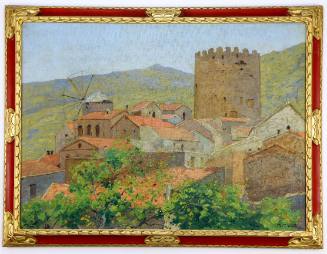
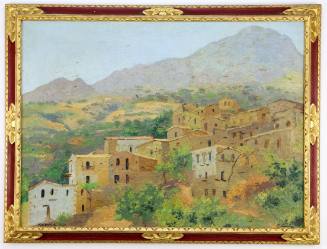
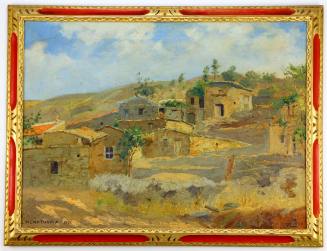
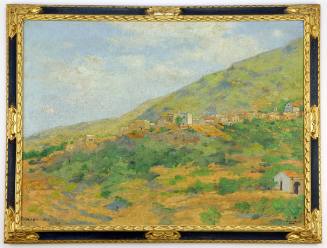
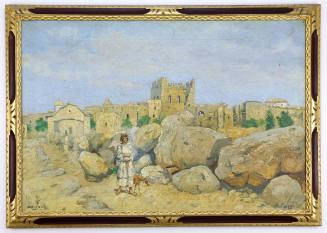
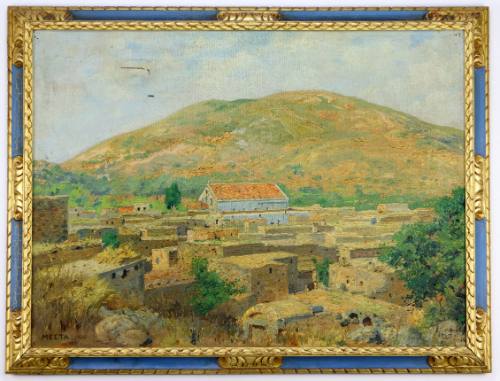
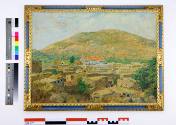
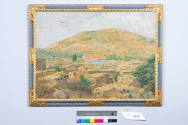
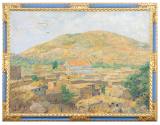
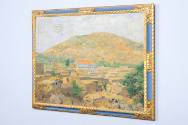
004628 Frixos Aristefs, Mesta, 1936, oil on canvas, 50 × 66 cm
Aristefs wrote in his Autobiography: “Mesta has an intense medieval character. All the houses are vaulted, and above and below the arches are streets, because the houses are connected to one another [...]. As a result, the general view is rather monotonous, because only the rooftops of the houses are visible.” In this excerpt, the painter seems to recognize that the purpose of his series of paintings from Chios was simply to document the island for the pleasure of his patron, Argentis. These general views of traditional villages were of little interest to the Symbolist artist, who preferred subjects derived from imagination and myths. This does not mean, however, that his paintings from Chios lack aesthetic or historical value. In the case of Mesta, the medieval village may have appeared monotonous to the painter, yet it constitutes a valuable visual record of the settlement. The severe volumes of the stone houses, built with local materials, blend harmoniously with the landscape. At the center stands the imposing Church of the Archangels (Pammegiston Taxiarchon), built on the site of the demolished Genoese tower. Above all, the painting shows that Aristefs, with bold drawing, quick and impasto brushstrokes, and bright, warm colors, was able to capture the landscape of the island in a way that is both original and realistic—balancing meticulous observation with artistic freedom.