
Πυργί
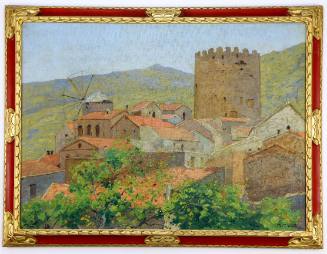
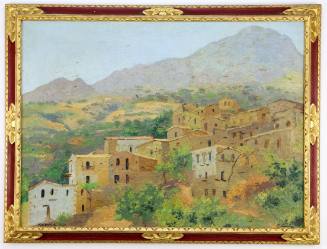
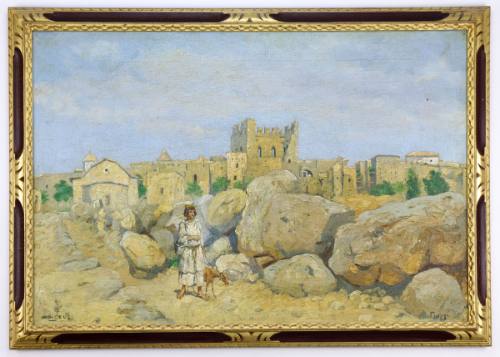
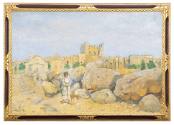
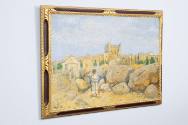
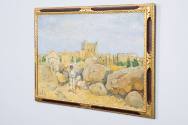
004627 Frixos Aristefs, Pyrgi, 1936, oil on canvas, 50 × 71 cm
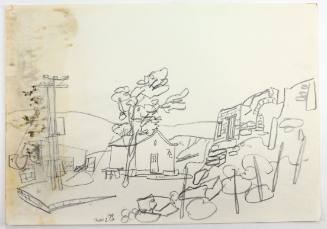
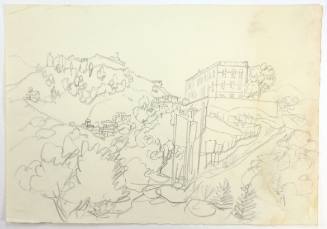
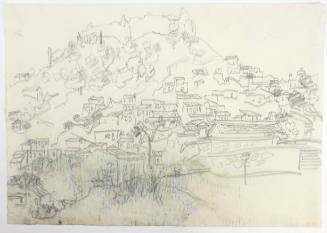
Pyrgi, the largest village in southern Chios, is a settlement of great historical and folkloric significance. Its most distinctive feature is the decoration of house façades with sgraffiti (the original xistà technique): black-and-white geometric patterns etched into the plaster. Aristefs was captivated by the village. Nevertheless, when he painted it, he gave no attention to the xistà decorations. Staying outside the boundaries of the medieval settlement, he adopted his typical compositional structure, dividing the image into three successive zones: in the foreground, he painted a country road with a row of rocks to the right. The scene is vivid thanks to the figure of a young woman in traditional white dress, holding a metal jug in one hand and a baby goat in the other. A watercolor of a Pyrgousaina (a woman from Pyrgi, now in the collection of the Chios Library), likely served as a model for this figure. The village occupies the middle and primary zone of the composition. The distant view allows us to perceive the fortified, medieval character of the settlement: the exterior walls of the houses also function as a defensive wall, protecting the inhabitants from pirate raids. The painting holds historical significance as well, since Aristefs painted—at the center of the composition—the Genoese tower with its battlements, which were demolished two years later after being deemed structurally unsafe.