
Άποψη χωριού
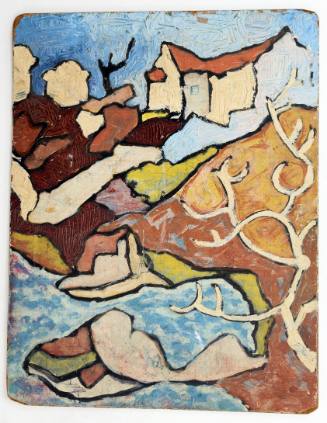
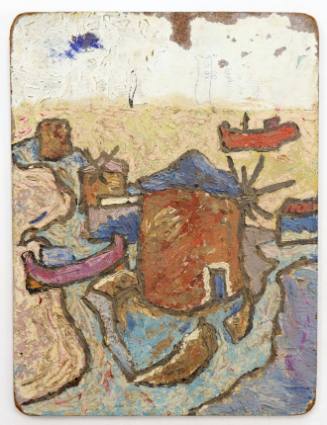
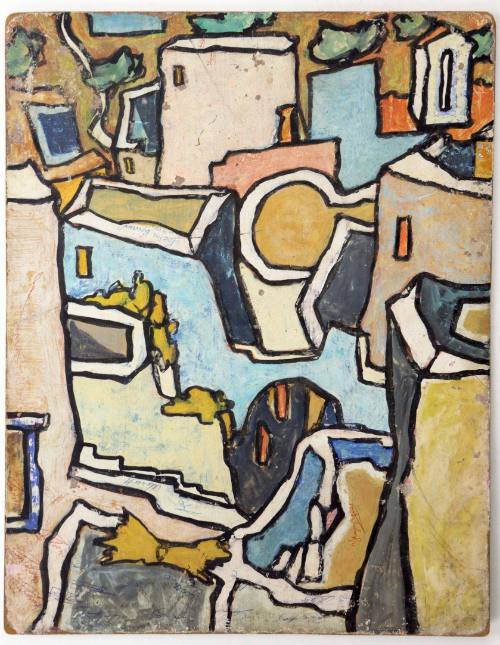
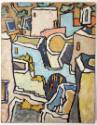
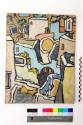
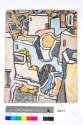
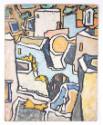
005855 Nikos Yialouris, Village, n.d., oil on cardboard, 38.5 × 30 cm
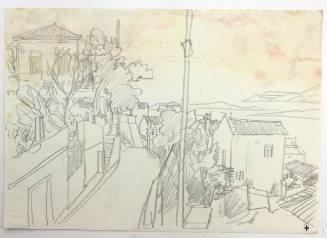
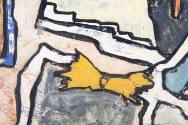
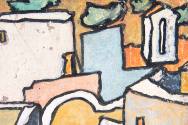
The most well-known series of works by Yialouris—the one that brought him fame within the context of 20th-century Greek art—was his depictions of the villages of Chios in the linoleum print technique: black-and-white prints inspired by the island where he was born and raised. This particular painting, from an early period in his work, shows that traditional settlements occupied him even while he was still forming his personal style, at a time when he drew upon diverse influences. In his familiar style, the painter depicts his subject from an elevated vantage point. Before him stretch the rooftops of traditional houses, and in the distance, beyond the boundaries of the settlement, low trees and fields can be seen. The true subject of the painting, of course, is the architecture itself. Rendered with a Cubist sensibility, the buildings are defined by a hard, black outline. The clear planes are filled with bright colors—light blue and beige, brown, and some gray—giving a multicoloured, anti-realistic image of the village. The young artist’s aim is not an exact depiction of the place, nor a picturesque image of the village. His goal is to interpret the landscape through Modernism, especially the work of Cézanne and Cubism. These traits would survive into the mature phase of his career.