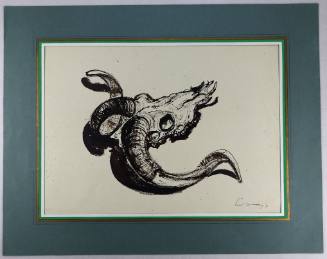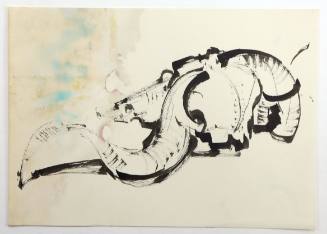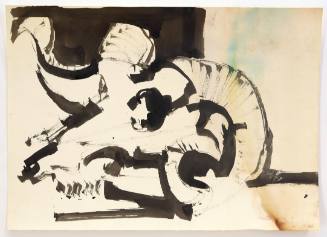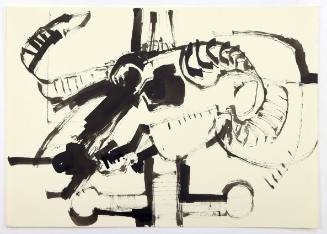

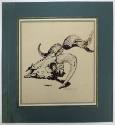
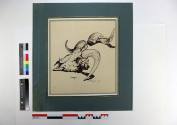
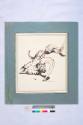
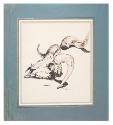
Κρανίο ζώου
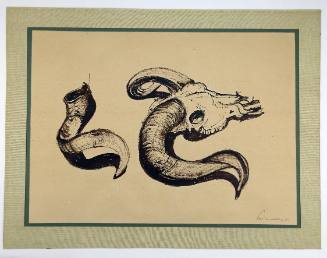
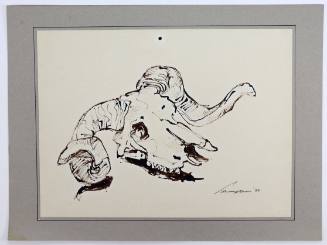
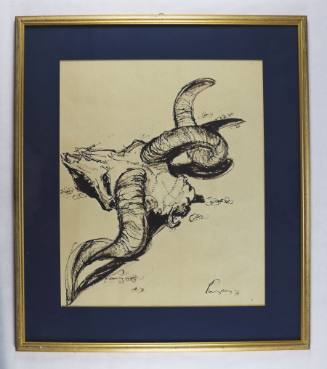
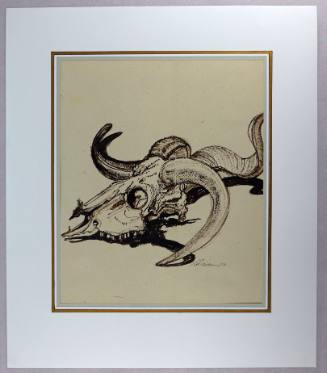
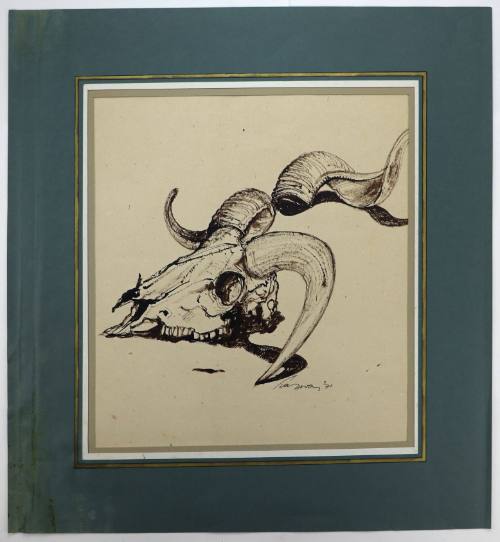
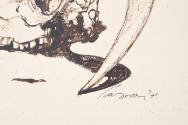
001135 Nikos Yialouris, Animal's Skull, 1971, sepia ink on paper, 70 × 66 cm
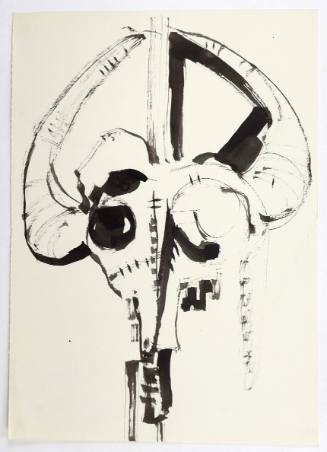
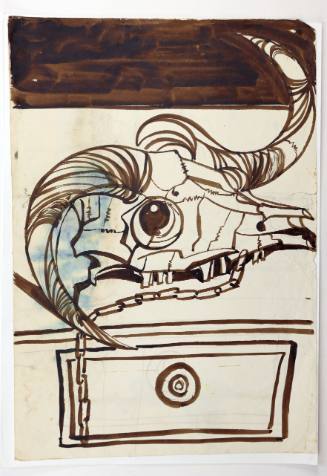
The skull—human or animal—has long remained one of the most powerful symbols of death. In Western art, it has often been used in the context of the vanitas still life, a reminder of life’s futility. Picasso, for instance, used bull skulls during the Spanish Civil War and later during World War II. Similarly, animal skulls appear in the postwar works of the Lesvian painters Orestis Kanellis and Takis Eleftheriadis. Yialouris aligns himself with this tradition when he depicts the horned skull of a ram. With sharp, realistic draftsmanship, a focus on detail, and a keen interest in light and shadow, the artist captures the bones and horns as if they were living forms. He uses the colour of the paper itself as the ground, bathed in the relentless light of the sun. Not coincidentally, this work was created during a dark period in Greek history—the years of the Regime of the Colonels (the Greek Junta, 1967-1975). Yialouris’s painting was not political from the outset. But gradually, from 1970 onward, the artist turned toward allegory through the use of symbols. Though his art never assumed a political or class-based stance, it commented on societal ills, primarily through a poetic lens.